

Society updated
Die Presse: Shkodra – një qytet që po ngrihet përsëri
What happened
Compiled from the sources
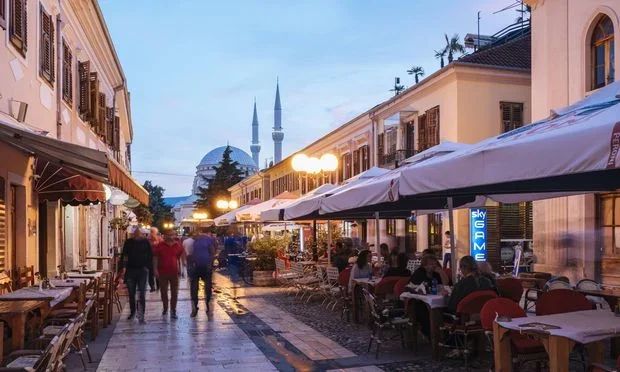
Në Rrugën Kol Idromeno, shëtit i gjithë qyteti dhe shijon mbrëmjen, në sfond xhaminë Ebu Baker. Pamje ajrore e Shkodrës në luginën e Drinës. – (c) imago/robertharding (Fotografia nga Ben Pipe) Xhamitë janë të hapura për të gjithë njerëzit.
In the story's original language
An excerpt from Shkoder.net
Në Rrugën Kol Idromeno, shëtit i gjithë qyteti dhe shijon mbrëmjen, në sfond xhaminë Ebu Baker. Pamje ajrore e Shkodrës në luginën e Drinës. – (c) imago/robertharding (Fotografia nga Ben Pipe) Xhamitë janë të hapura për të gjithë njerëzit. Karrocat, makinat dhe çiklistët ndajnë të njëjtat rrugë. Shkodra është një qytet i qetë në Shqipëri. Ndoshta sepse historia ishte kaq e ndryshme. Nga Michaela Ortis, 14.05.2018 “Unë jam katolike dhe jam martuar me një musliman, kjo është shumë lehtë tek ne“, thotë Gloria. Gruaja e re jeton në Shkodër, qyteti më i vjetër në Shqipëri, dhe ajo ka një qasje të relaksuar ndaj fesë – sot një shembull i vlerësuar. Në komunizëm, kjo ishte ndryshe, Enver Hoxha shpalli në vitin 1967 shtetin e parë ateist në botë. Kishte kisha dhe xhami të shkatërruara dhe klerikë të persekutuar, i kishin torturuar, i dërgonin në kampet e punës. Shkodra u godit veçanërisht keq, dëshmon në faqen e sapohapur të Dëshmitarëve të Muzeut të Kujtesës në vendin ku ish-policia sekrete…
What is still uncertain
From Mosaic, not from a publisher
- So far only Shkoder.net reports this story on Mosaic, so there is no other coverage to compare it with.
How they headlined it
-
Shkoder.net Albania · when Mosaic first saw it
Die Presse: Shkodra – një qytet që po ngrihet përsëri
By Admin
Earliest report found by Mosaic
Në Rrugën Kol Idromeno, shëtit i gjithë qyteti dhe shijon mbrëmjen, në sfond xhaminë Ebu Baker. Pamje ajrore e Shkodrës në luginën e Drinës. – (c) imago/robertharding (Fotografia nga Ben Pipe) Xhamitë janë të hapura për të gjithë njerëzit.
Compiled from the outlet's own words · In the story's original language
Publisher's date:

How we decide
From Mosaic, not from a publisher
An article's time is the date its publisher gives, when that is plausible: not in the future, and not more than 180 minutes before Mosaic found the article. Otherwise it is when Mosaic first saw it. "Earliest report found by Mosaic" is the one with the earliest time; it does not prove that its outlet published first.
An article is marked "Repeats another outlet's text" when its cleaned text is word for word the same as another article's in the story, or nearly the same (the two texts' SimHash fingerprints differ in at most 12 of 64 bits). Both texts must have at least 30 words, and the articles must be within 48 hours of each other. That does not say who took it from whom: it can be a news agency's text or a press release that several outlets published.
It is also marked when at least 50 % of the two texts' three-word sequences are shared (estimated with MinHash), as with a copy whose lead, footer or page elements differ.
Think one of these labels is wrong? Use "Contest this" beside it: staff look at every one.
A vote says whether a story deserves more or less prominence; it does not say whether it is true. If a story is false or misleading, report it instead. For now votes are collected and do not change the order of stories. How votes are used · Report it as false or misleading
Follow developments
This story cannot be followed on its own. Follow its topics and category, and the new stories about them appear under Following.
Readers’ comments
These are readers’ own words, not the publishers’ and not Mosaic’s. Moderators read them; a comment that breaks the rules is hidden or removed.
No comments yet. Be the first to say something useful.