


Society updated
Panik në Rusi dhe Ukrainë! Sulm masiv kibernetik, qytetarët marrin alarme të rreme për sulme bërthamore: Fshihuni në bodrume!
What happened
Compiled from the sources
Panik në Rusi dhe Ukrainë! Sulm masiv kibernetik, qytetarët marrin alarme të rreme për sulme bërthamore: Fshihuni në bodrume!
In the story's original language
An excerpt from BalkanWeb
Qytetarët në Rusi dhe Ukrainë janë përballur me panik pas një sulmi masiv kibernetik që goditi aplikacionet e paralajmërimit të emergjencave në të dyja vendet. Përdoruesit morën njoftime të rreme për rrezik rrezatimi, sulme bërthamore dhe kërcënime kimike, ndërsa autoritetet u detyruan të dilnin me deklarata për të qetësuar popullatën. Problemet e para u raportuan në Ukrainë, ku aplikacioni që përdoret për njoftimin e sulmeve ajrore shfaqi alarme për rritje të nivelit të rrezatimit në Kiev dhe zona të tjera të vendit. Forcat Ajrore ukrainase konfirmuan se aplikacioni ishte komprometuar, duke theksuar se nuk kishte asnjë kërcënim real nga rrezatimi. “Aplikacioni i paralajmërimit për sulme ajrore duket se është kompromentuar. Nuk ka kërcënim nga rrezatimi! Qëndroni të qetë dhe ndiqni përditësimet tona”, njoftuan Forcat Ajrore në Telegram. Zëdhënësi i tyre, Yuriy Ignat, konfirmoi se bëhej fjalë për një sulm kibernetik. Për një periudhë të shkurtër, përdoruesit morën disa njoftime…
What is still uncertain
From Mosaic, not from a publisher
- So far only BalkanWeb reports this story on Mosaic, so there is no other coverage to compare it with.
How they headlined it
-
BalkanWeb Albania · when Mosaic first saw it
Panik në Rusi dhe Ukrainë! Sulm masiv kibernetik, qytetarët marrin alarme të rreme për sulme bërthamore: Fshihuni në bodrume!
Earliest report found by Mosaic
Panik në Rusi dhe Ukrainë! Sulm masiv kibernetik, qytetarët marrin alarme të rreme për sulme bërthamore: Fshihuni në bodrume!
Compiled from the outlet's own words · In the story's original language

How we decide
From Mosaic, not from a publisher
An article's time is the date its publisher gives, when that is plausible: not in the future, and not more than 180 minutes before Mosaic found the article. Otherwise it is when Mosaic first saw it. "Earliest report found by Mosaic" is the one with the earliest time; it does not prove that its outlet published first.
An article is marked "Repeats another outlet's text" when its cleaned text is word for word the same as another article's in the story, or nearly the same (the two texts' SimHash fingerprints differ in at most 12 of 64 bits). Both texts must have at least 30 words, and the articles must be within 48 hours of each other. That does not say who took it from whom: it can be a news agency's text or a press release that several outlets published.
It is also marked when at least 50 % of the two texts' three-word sequences are shared (estimated with MinHash), as with a copy whose lead, footer or page elements differ.
Think one of these labels is wrong? Use "Contest this" beside it: staff look at every one.
A vote says whether a story deserves more or less prominence; it does not say whether it is true. If a story is false or misleading, report it instead. For now votes are collected and do not change the order of stories. How votes are used · Report it as false or misleading
Follow developments
This story cannot be followed on its own. Follow its topics and category, and the new stories about them appear under Following.
Other related stories
-
Related story

Society
Panik në ajër! Avioni i linjës Londër-Tiranë pëson difekt gjatë fluturimit
-
Related story

Society
Momente ankthi në avion/ British Airways pëson defekt gjatë fluturimit për Tiranë
-
Related story

Justice and crime
Zjarri masiv në Shkodër, flakët dalin jashtë kontrollit, panik tek qytetarët
-
Related story
Society
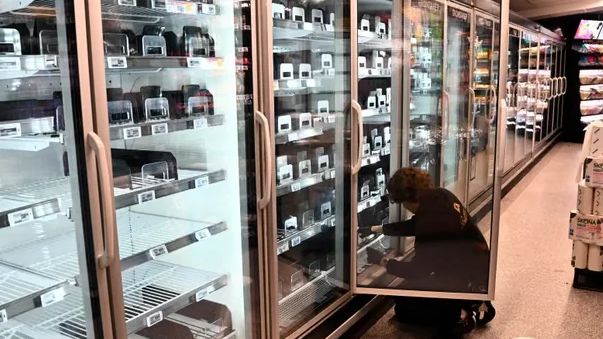
Sulme kibernetike në Europë, mesazhe të rreme për goditje bërthamore në Ukrainë. Hakerohen edhe supermarketet


Readers’ comments
These are readers’ own words, not the publishers’ and not Mosaic’s. Moderators read them; a comment that breaks the rules is hidden or removed.
No comments yet. Be the first to say something useful.